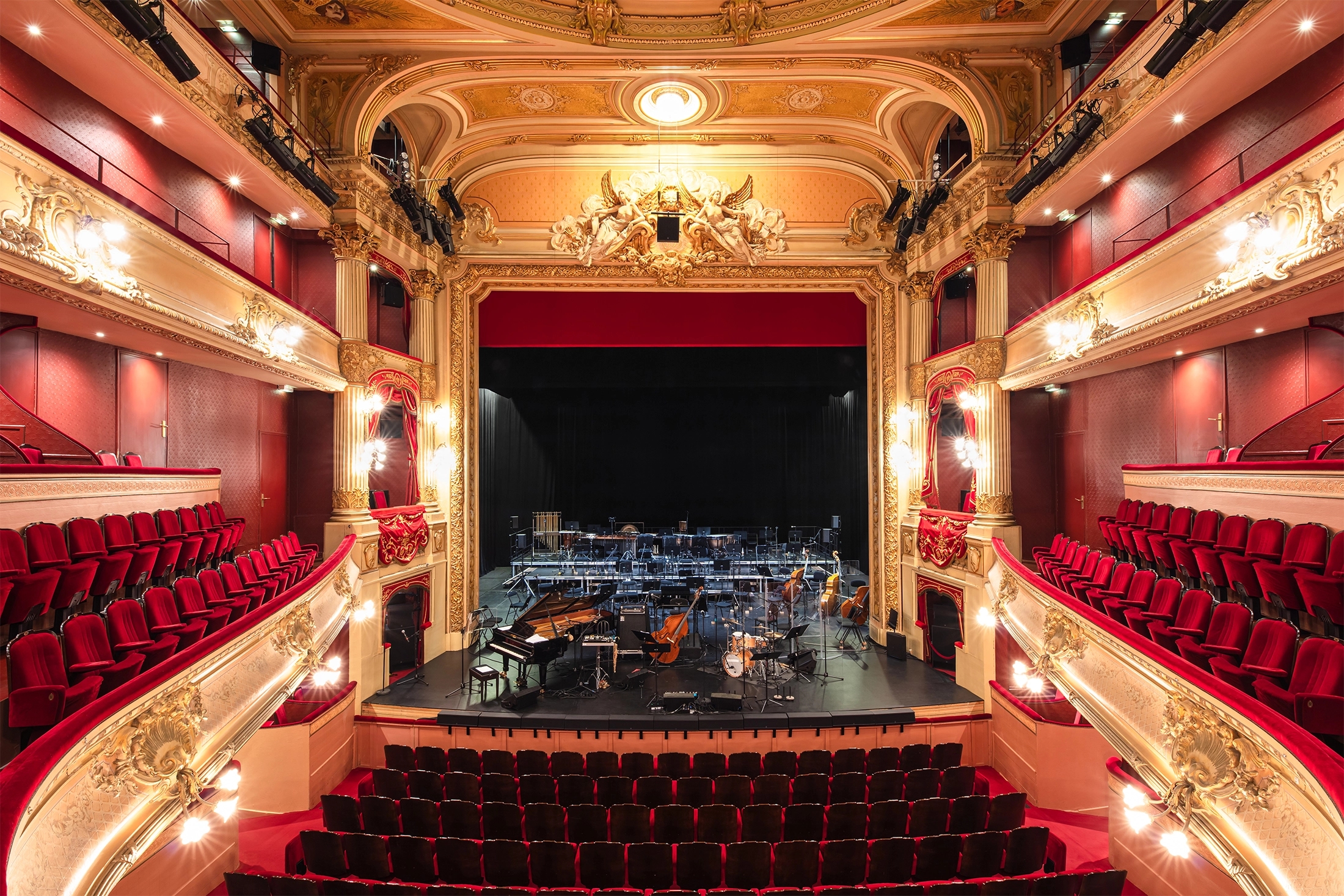
Since the opening of the 2025–2026 season, the Opéra de Rennes has been equipped with a permanent immersive sound system combining HOLOPHONIX and Amadeus technologies. Designed for one of France's finest nineteenth-century Italian-style opera houses, the installation introduces object-based spatial audio while preserving the venue's acoustic identity.
In operation under the supervision of Marie Guérin, Head of Audiovisual Services at the Opéra de Rennes, the project reflects a growing evolution in the way historic performance venues approach sound reinforcement. Immersive technologies are increasingly being used to enhance localisation, clarity and listening comfort while respecting the architecture and acoustics of the space.
A sound system designed for a historic opera house
Integrating sound reinforcement into a listed nineteenth-century theatre required accommodating four balcony levels, multiple orchestra pit configurations and strict architectural constraints, while keeping the system as visually discreet as possible.
From the outset, the objective was not to transform the theatre's natural acoustics, but to preserve them while delivering a more coherent listening experience throughout the auditorium.
We chose an Amadeus solution integrating the HOLOPHONIX system because this approach enables much finer spatialisation and more even sound distribution, using more compact loudspeakers that could be integrated more discreetly into the architecture,
explains Marie Guérin.
The installation combines three Amadeus C15 loudspeakers for the main front system, six C12 loudspeakers providing coverage for the upper balconies, four ABB 12 low-frequency extension units and two ABB 18 subwoofers extending reproduction below 40 Hz.
At the centre of the deployment, eleven custom-mounted Amadeus SR730 ODR modules form a dedicated front-fill ramp aligned with the orchestra rake, while bespoke rigging hardware allows rapid reconfiguration between the opera house's three orchestra pit layouts.
Object-based spatialisation for opera
The system is driven by HOLOPHONIX Native running on an Apple Mac mini M4. An RME Digiface Dante interface manages 128 simultaneous channels across Dante and MADI networks, while four Powersoft Ottocanali DSP+D amplifiers power the installation.
Using HOLOPHONIX, each instrument is processed as an individual spatial object and reproduced from its actual position on stage, allowing the sonic image to remain aligned with the visual performance.
What the HOLOPHONIX solution gives us is the ability to disappear, for the technology not to feel apparent to the audience. Our goal is to remain transparent. That's really what we achieve with HOLOPHONIX. We're in a much better place than before,
says Arthur Paichereau, sound engineer at the Opéra de Rennes.
Rather than relying on a conventional left-right stereo image, the system reinforces the orchestra while preserving the audience's natural perception of the performance.
In a classic left-right system, the brain constantly has to compensate: it hears an instrument from one side while seeing it somewhere else. With this system, the piano is exactly where you see it. That cognitive effort disappears, and you can fully enter into the music,
Arthur continues.
Hybrid productions in practice
The installation fully revealed its capabilities during a recent collaboration between the Orchestre National de Bretagne and Paris-based jazz collective In Waves, where amplified soloists performed alongside a symphony orchestra.
Each orchestral section was treated as an independent sound object within HOLOPHONIX, allowing engineers to build a coherent spatial image while preserving the orchestra's natural character. Working alongside sound engineer Benoît Brière, the team simultaneously managed twenty-eight active sound objects, including twenty-four stereo objects.
The same object-based workflow also enables virtual soundcheck sessions, where multitrack recordings can be replayed as though the musicians were physically present on stage.
A new approach to opera sound
Beyond a single installation, the project reflects a broader evolution in the role of immersive audio within historic performance venues. Rather than creating spectacular effects, HOLOPHONIX reinforces localisation, clarity and listening comfort while preserving the acoustic identity of the space.
This spatial perception does not rely solely on the HOLOPHONIX processor, but also on the diffusion work carried out with the Amadeus loudspeakers. The precision, distribution and consistency of the loudspeaker deployment fully contribute to this sensation of immersion and spatial localisation throughout the auditorium,
concludes Marie Guérin.
As the Opéra de Rennes continues to develop its productions, the installation establishes a foundation for a distinctive sonic signature, one where immersive technology enhances the listening experience while remaining virtually invisible to the audience.
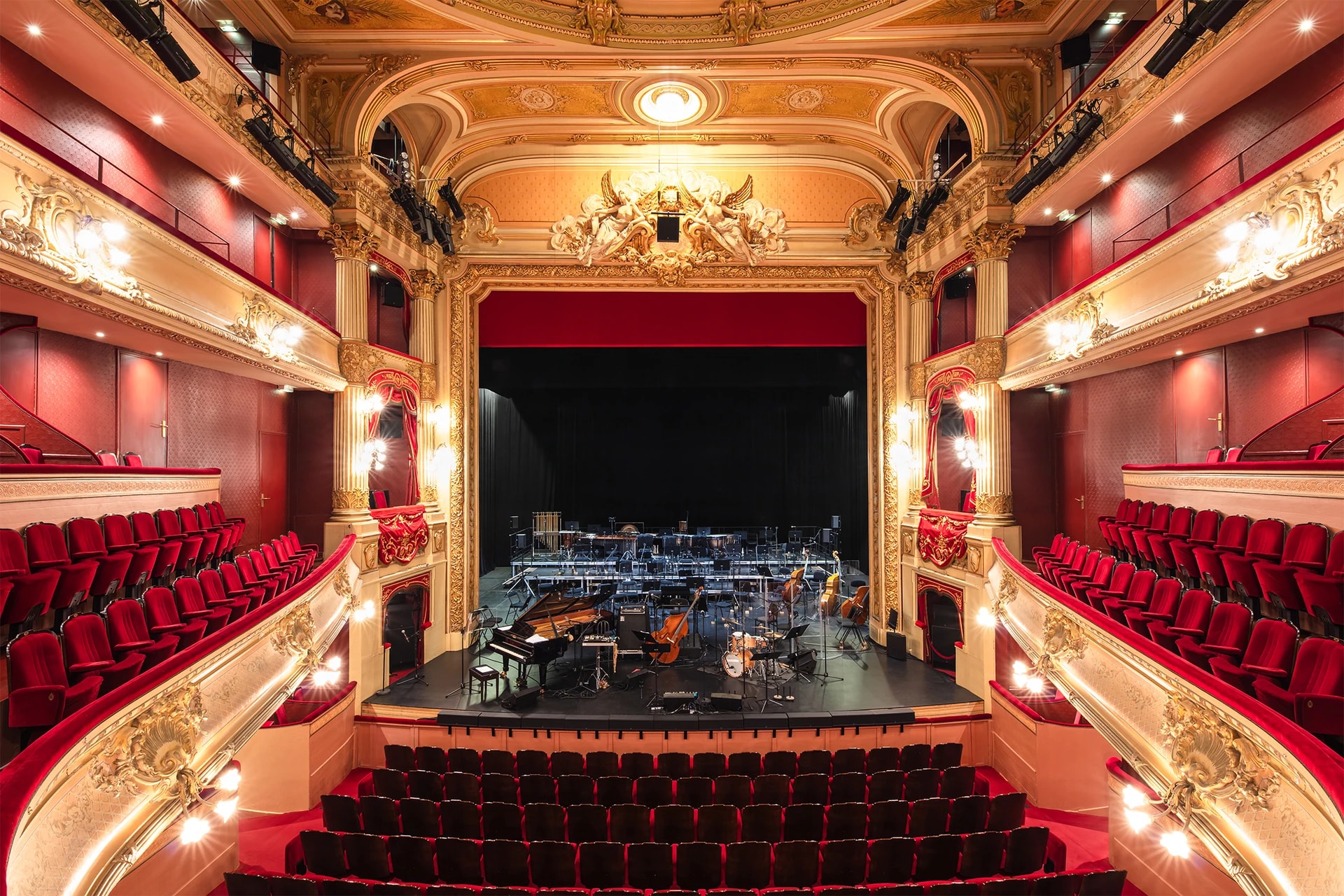
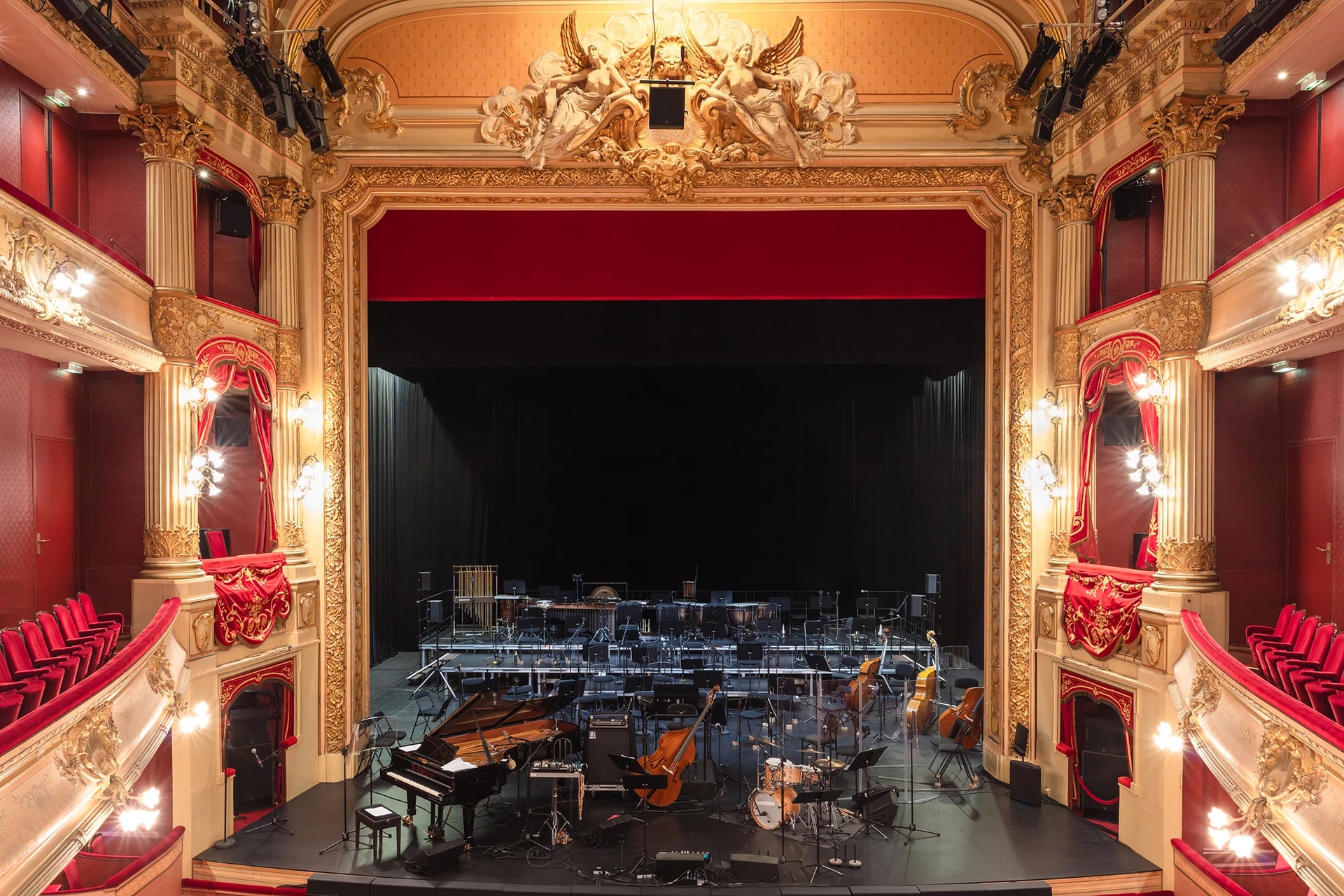
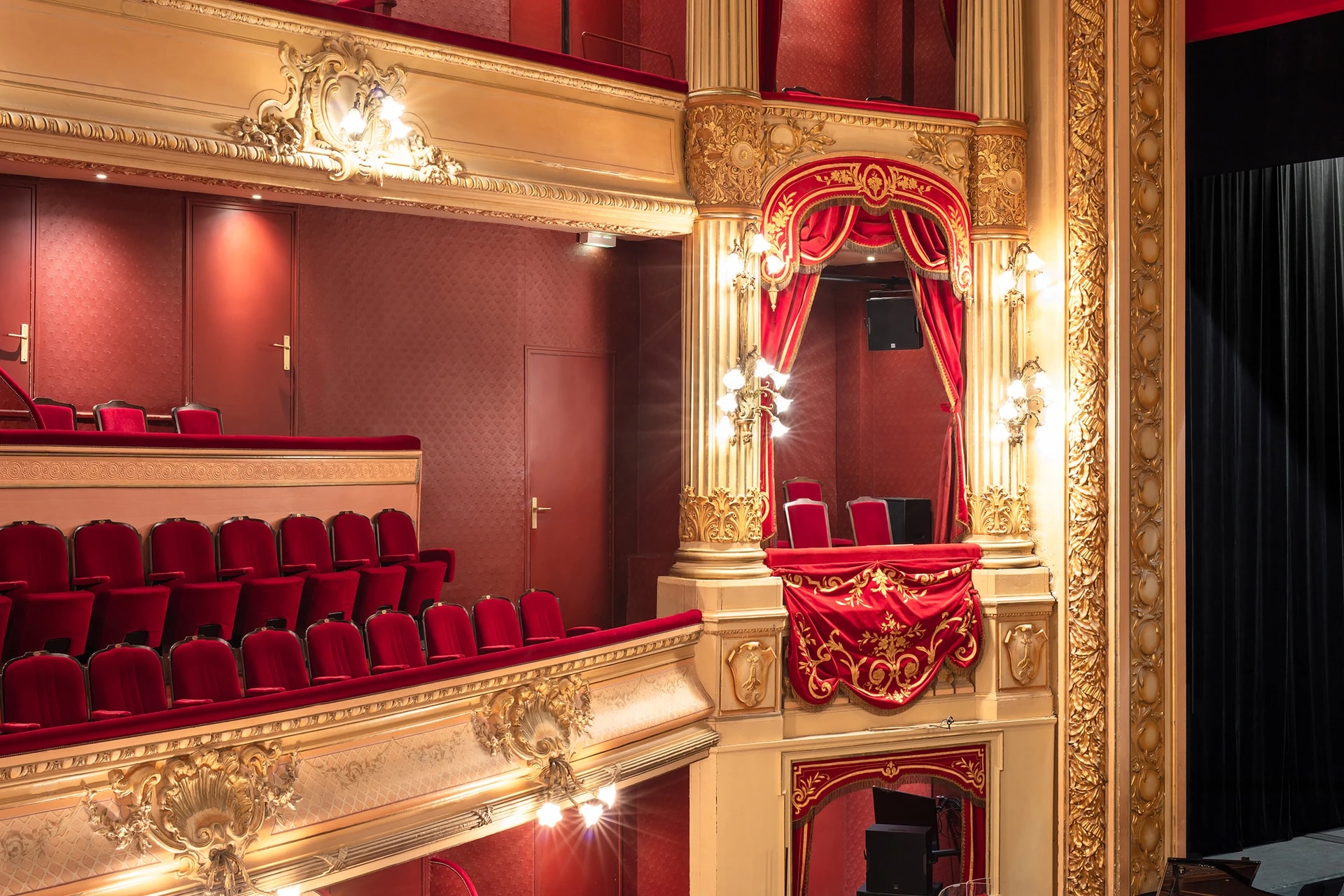
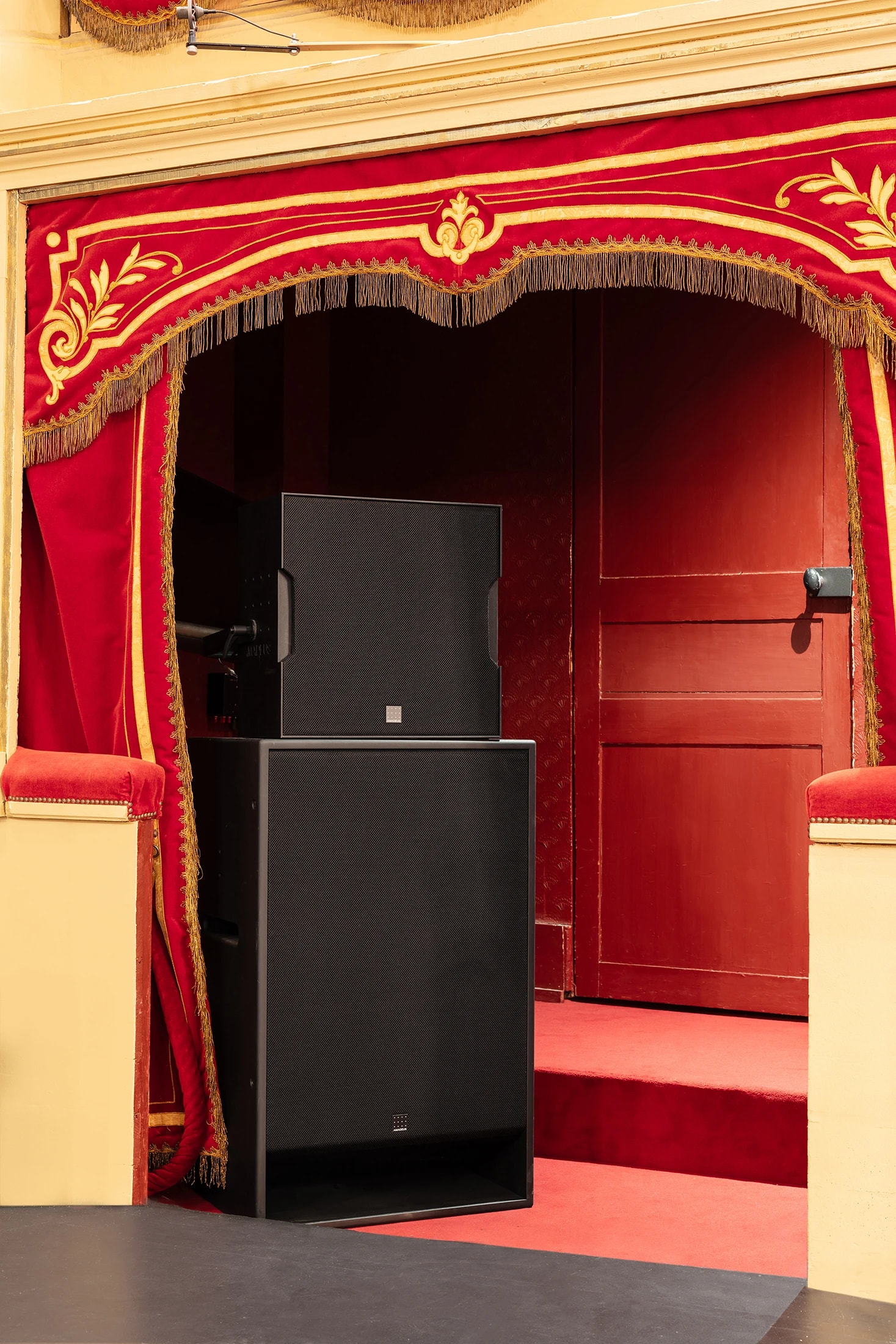
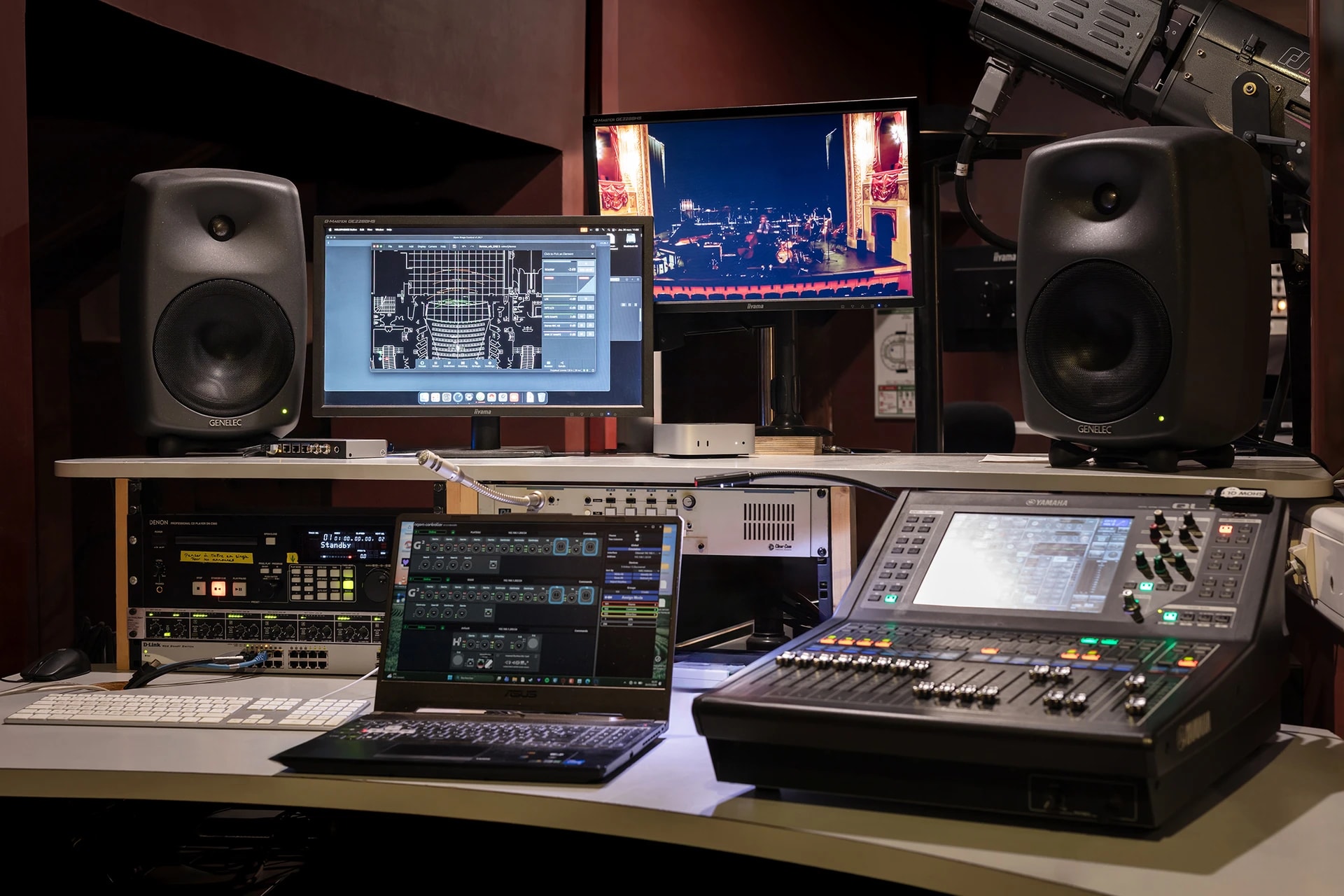
Photo credits — © Helen Karam