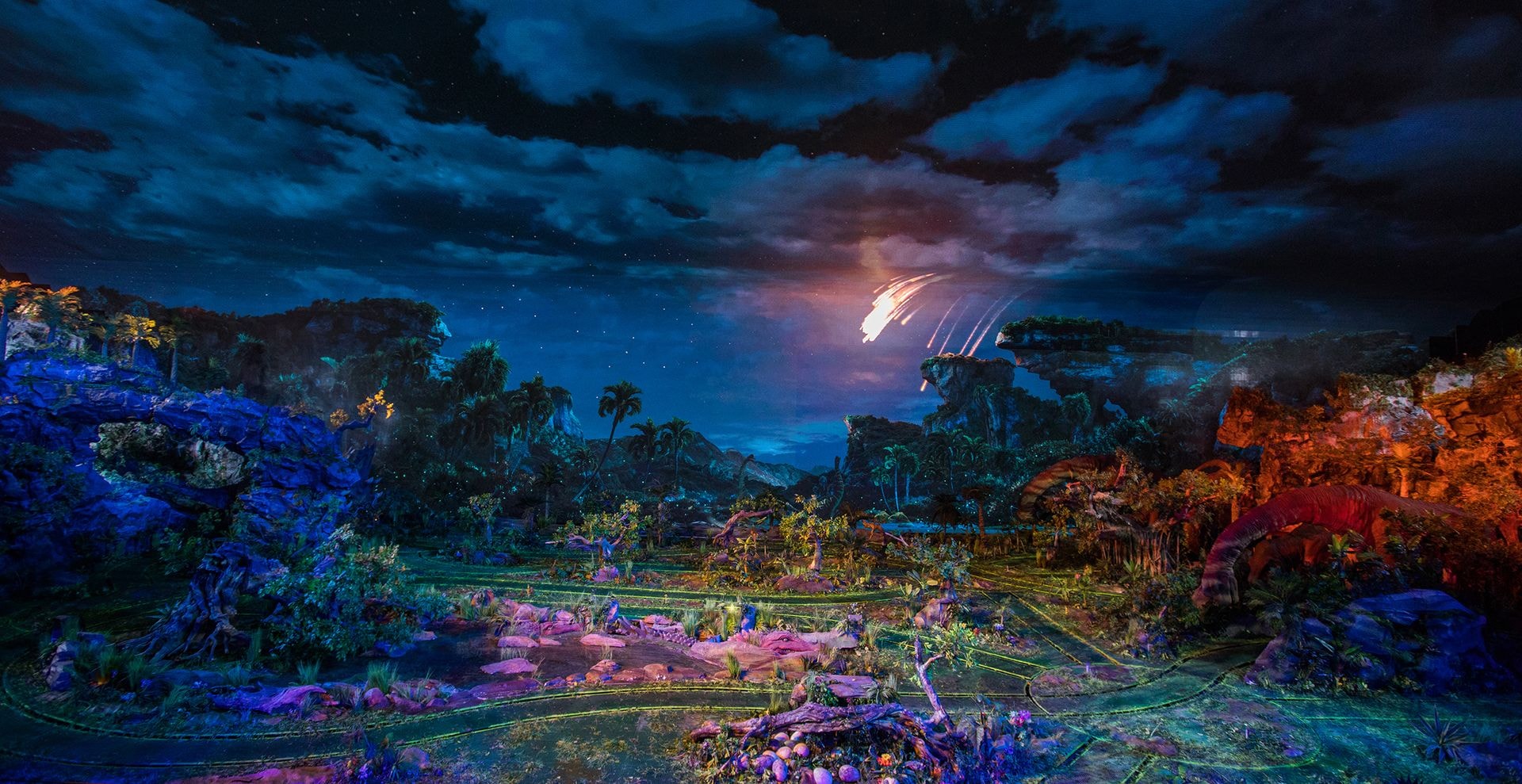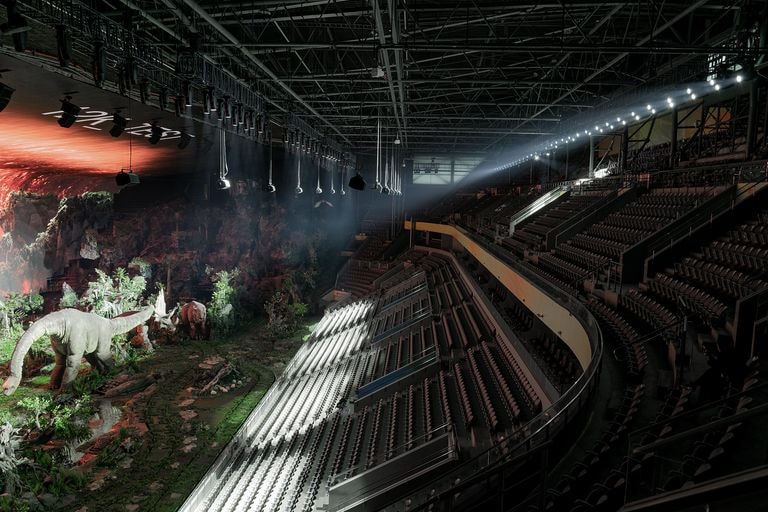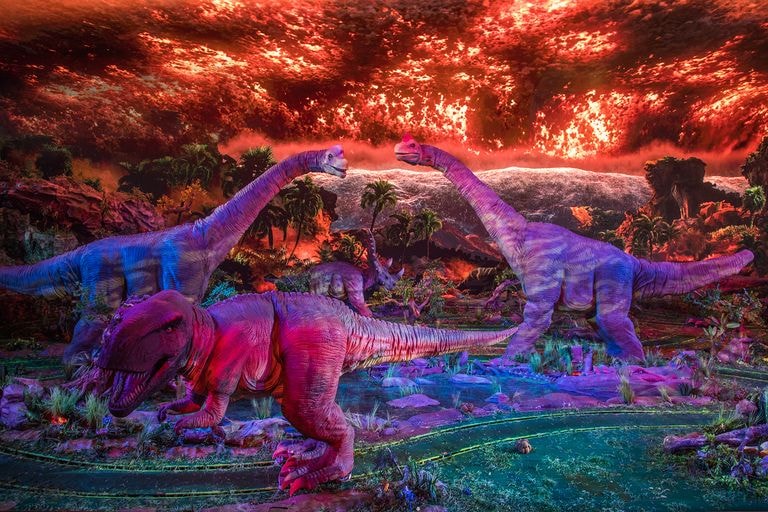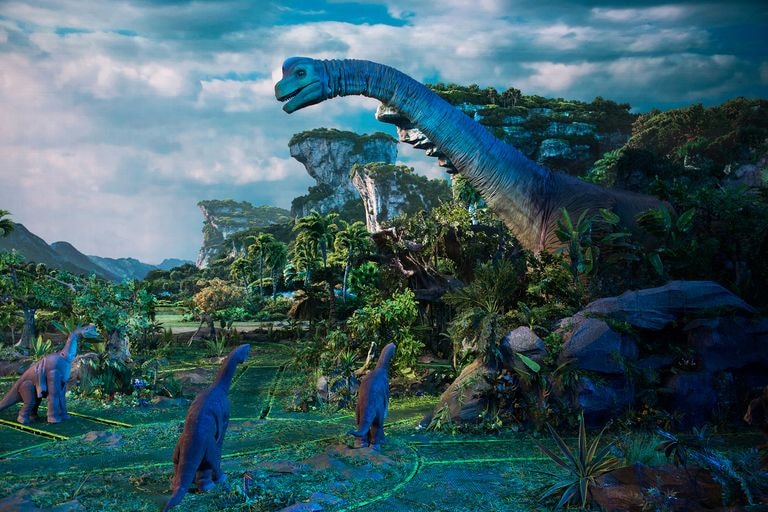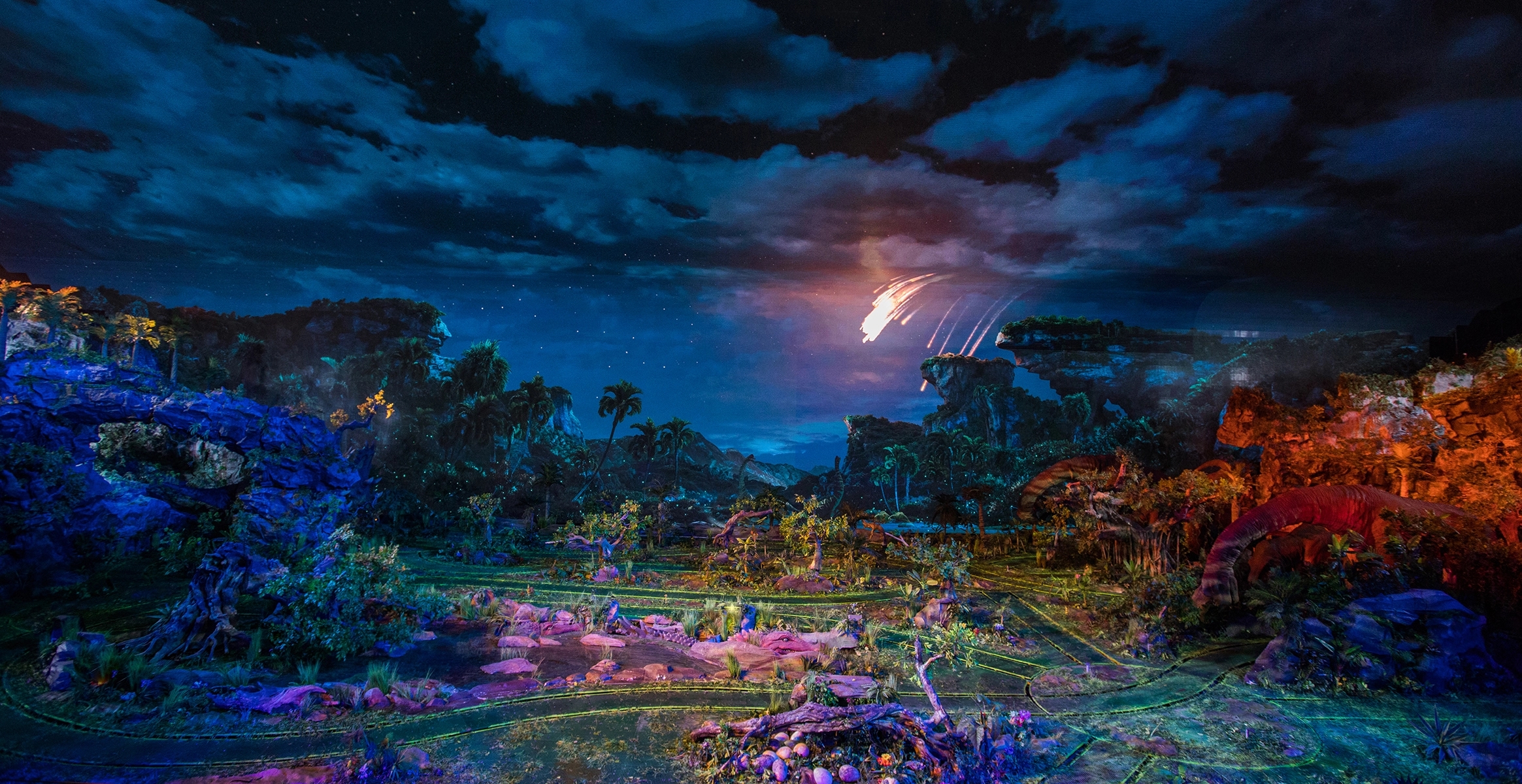
Inside the iconic Beijing National Indoor Stadium, part of the Olympic Park built for the 2008 Summer Games, visitors are transported 65 million years back in time. The Long Gone Dinosaur, a monumental immersive show, invites audiences to step into the world of dinosaurs, where forests, lakes, mountains, storms, and life-size robotic creatures come together in a breathtaking spectacle.
At the heart of this experience lies HOLOPHONIX, Amadeus’ spatial sound processor, bringing sound to life in three dimensions. Over 180 Amadeus loudspeakers, line arrays, point sources, and horn-loaded subwoofers, fill the 10,000-square-meter stadium with precise, enveloping audio. Every footstep, roar, and thunderclap moves naturally around the audience, creating an unprecedented sense of immersion.
We have been using Amadeus' spatial sound processor HOLOPHONIX to mix and reverberate sound material, played from a Pro Tool HD sequencer, using highly advanced 2D and 3D sound algorithms designed at IRCAM-based STMS Lab. The HOLOPHONIX setup featured a combination of six spatialization buses, each running one of the different sound algorithms available, including Higher-Order Ambisonics (2D, 3D), Vector-Base Amplitude Panning (2D), and Wave Field Synthesis,
explains Thierry Coduys, sound engineer.
The creative team combined classical music with hundreds of sound effects, rain, wind, thunderstorms, meteor strikes, waves, to build a rich, dynamic soundscape. Original recordings were enhanced using modular synthesis systems, with some material captured via Ambisonics to maximize spatial realism.
We decided from the beginning to work with our own sound materials and enhance them using advanced synthesis and spatialization tools. HOLOPHONIX allowed us to create a fully immersive audio experience that is as precise and expressive as the visual elements themselves,
adds Coduys.
Sound design was an immense challenge. With a venue reverberation time of roughly 4 seconds and numerous reflective surfaces, the team relied on speaker positioning, aiming, and dispersion optimization rather than EQ alone to maintain clarity and intelligibility.
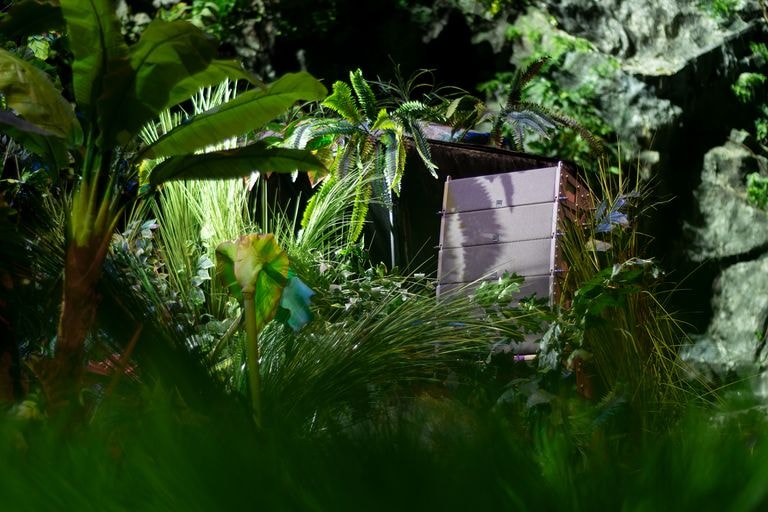
The sound reinforcement system is built around two main speaker arrays operating according to Wave Field Synthesis (WFS) principles. A suspended upper array comprises eight clusters of Amadeus DIVA XL loudspeakers with their dedicated subwoofers, while a ground-based lower array includes thirteen clusters of Amadeus DIVA XS, also reinforced in the low-frequency range.
Surround coverage is provided by four lateral DIVA XLclusters, complemented by an overhead system of 32 Amadeus UDX 15 point-source loudspeakers, enhancing vertical immersion.
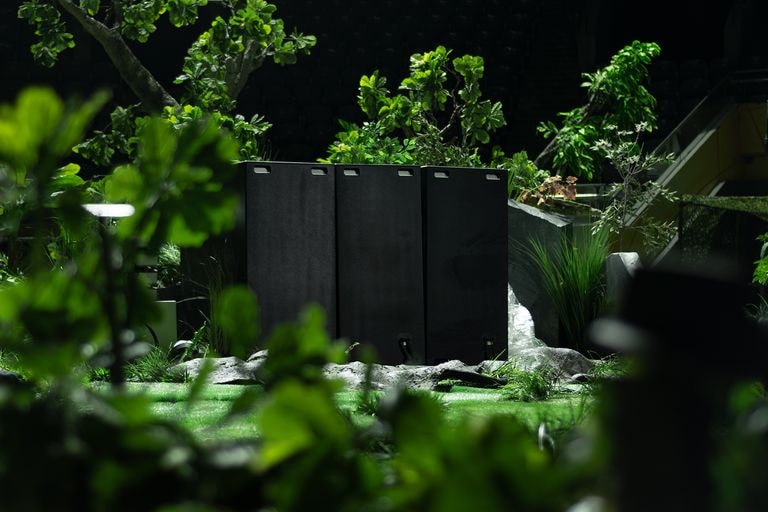
Low-frequency effects (LFE) are handled by twelve Amadeus MAESTRO II subwoofers, specifically developed for the Beijing National Indoor Stadium. Each unit features dual 15-inch drivers in a push-pull configuration. Designed to deliver high sound pressure levels below 50 Hz, these high-efficiency subwoofers are powered by Lab Gruppen C88:4 amplifiers in bridge mode, providing exceptional power and impact at venue scale.
The result is an audio ecosystem that moves with the narrative, tracks action, and places audiences at the center of the prehistoric world. The immersive sound is not just heard, it is felt.
Produced by He LiDe and He Qin Xiaomei, renowned creators of major cultural spectacles in China, The Long Gone Dinosaur reflects the country’s growing investment in immersive entertainment.
The Long Gone Dinosaur show brings us a focus on creation and innovation, using high technology, all while selecting companies from around the world to work with, such as Amadeus and HOLOPHONIX from France. We accomplish so much working together,
says producer He LiDe.
The show has already broken eight Guinness World Records, with its massive projection screens, life-size robotic dinosaurs, and meticulously designed landscapes.
For HOLOPHONIX, this project exemplifies the power of spatial sound as a storytelling tool, demonstrating how advanced audio technology can transform large-scale experiences.