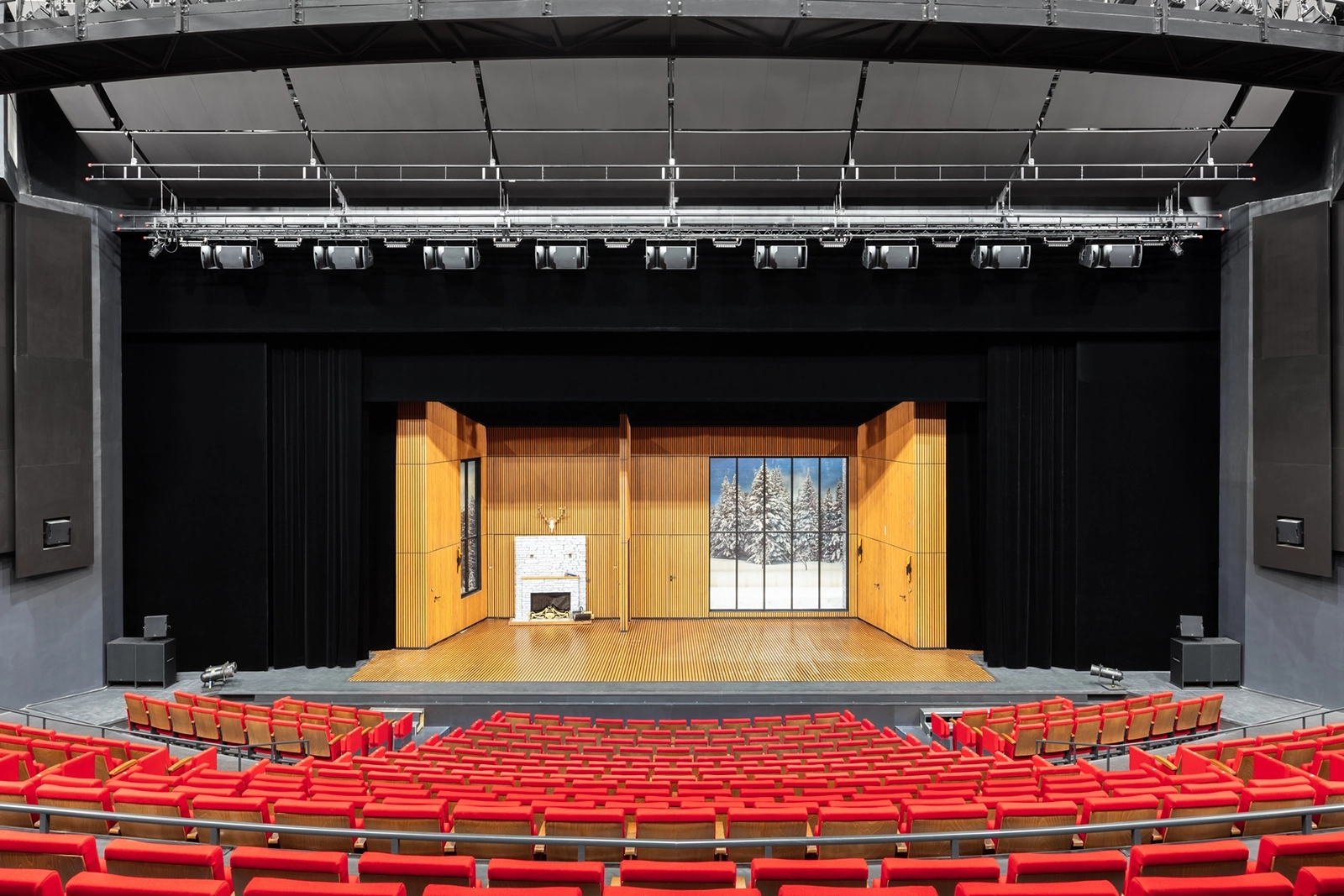
Following a major renovation, one of France's leading public theatre institutions reopens with an immersive sound infrastructure built around HOLOPHONIX spatial audio processing and Amadeus loudspeakers, including the world premiere deployment of the NUMAX XV point-source system in full production.
Located in Nanterre, near Paris, Théâtre Nanterre-Amandiers is one of France's leading public theatre institutions, known for its commitment to contemporary creation and large-scale productions. Its 800-seat main auditorium hosts theatre, experimental works, and hybrid productions combining music, scenography, and complex sound design. An extensive renovation from June 2021 to December 2025 provided an opportunity to rethink the hall's technical infrastructure entirely, particularly its approach to sound reinforcement.
Upon reopening, the venue introduced an immersive system for its main hall, built around Amadeus loudspeakers and driven by a HOLOPHONIX spatial sound processor. The system design reflects both technical ambition and architectural constraint.
From LCR to Immersive
After encountering HOLOPHONIX spatial sound processing at Théâtre National de Chaillot, Deputy Technical Director Jean-Michel Nedellec revised the installation plans entirely. The conventional LCR configuration was replaced with a redesigned infrastructure, adding loudspeaker positions throughout the auditorium to support immersive workflows.
The architecture imposed limitations. Rigging along lateral walls was restricted, and ceiling height ruled out line arrays. For the surround system, Amadeus C12 loudspeakers were integrated directly into the lateral acoustic panels.
The result is a surround system that is genuinely invisible. The loudspeakers are completely embedded within the panel structure,
says Nedellec.
For front-of-house, a compact point-source solution was selected, with Amadeus SR-1000 units deployed along the stage ramp as front-fill, in line with the objective of achieving high performance without introducing visually dominant elements into the space.
Given these constraints, the key question was whether a point-source system could deliver sufficient output and control. Touring engineers were initially sceptical.
The first reaction was often: this is not going to work. There’s no visible line array, so where does the power come from?
explains Nedellec.
The front-of-house system comprises nine NUMAX XV units, configured with progressive horizontal dispersion from 90° to 120°. Across the wider deployment, 22 Amadeus C12 loudspeakers provide surround coverage, 10 ultra-compact C4 units ensure near-field coverage for the furthest audience positions, and 12 CX 15 R monitors are available for stage use.
HOLOPHONIX at the Core
The spatial layer is handled by HOLOPHONIX, an agnostic platform enabling both conventional and object-based workflows. Two HOLOPHONIX Ultra processors are deployed across multiple spaces within the theatre, including a second room equipped with a Meyer Sound loudspeaker system, demonstrating the platform's ability to operate coherently across different loudspeaker families and acoustic environments.
The system was put to the test on opening weekend with Barocco, directed by Kirill Serebrennikov, a demanding hybrid production combining rock band, orchestra, and lyric voices.
When the sound engineer arrived, there were no issues at all. The system delivered exactly the level of power we needed,
notes Jean-Michel Nedellec.
Since opening, the system has supported a wide range of productions, from spoken theatre to complex spatial sound design. For Nedellec, the project represents something beyond a technical installation:
We didn't just install a system. We built an understanding of what the theatre needs and how it can evolve.
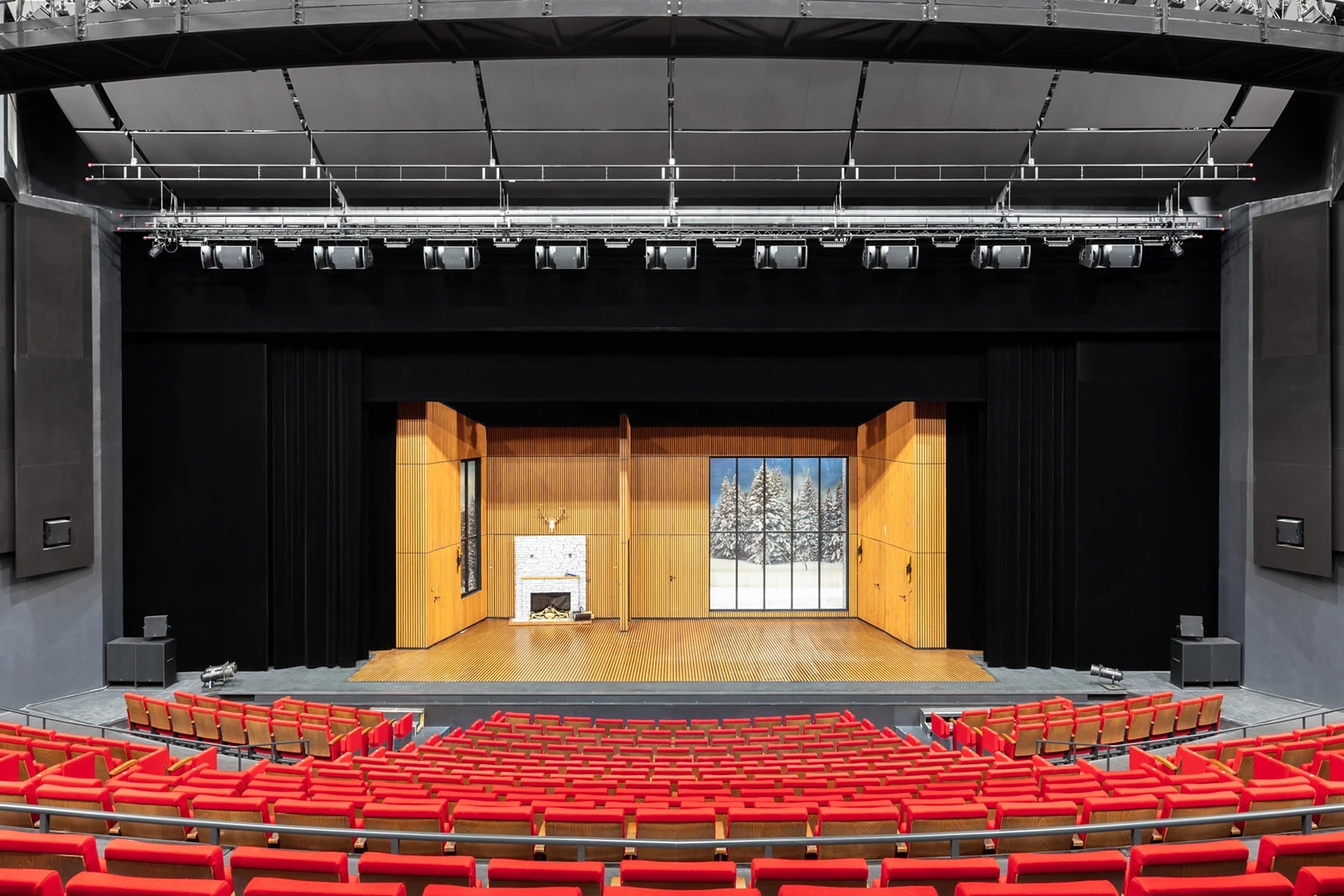
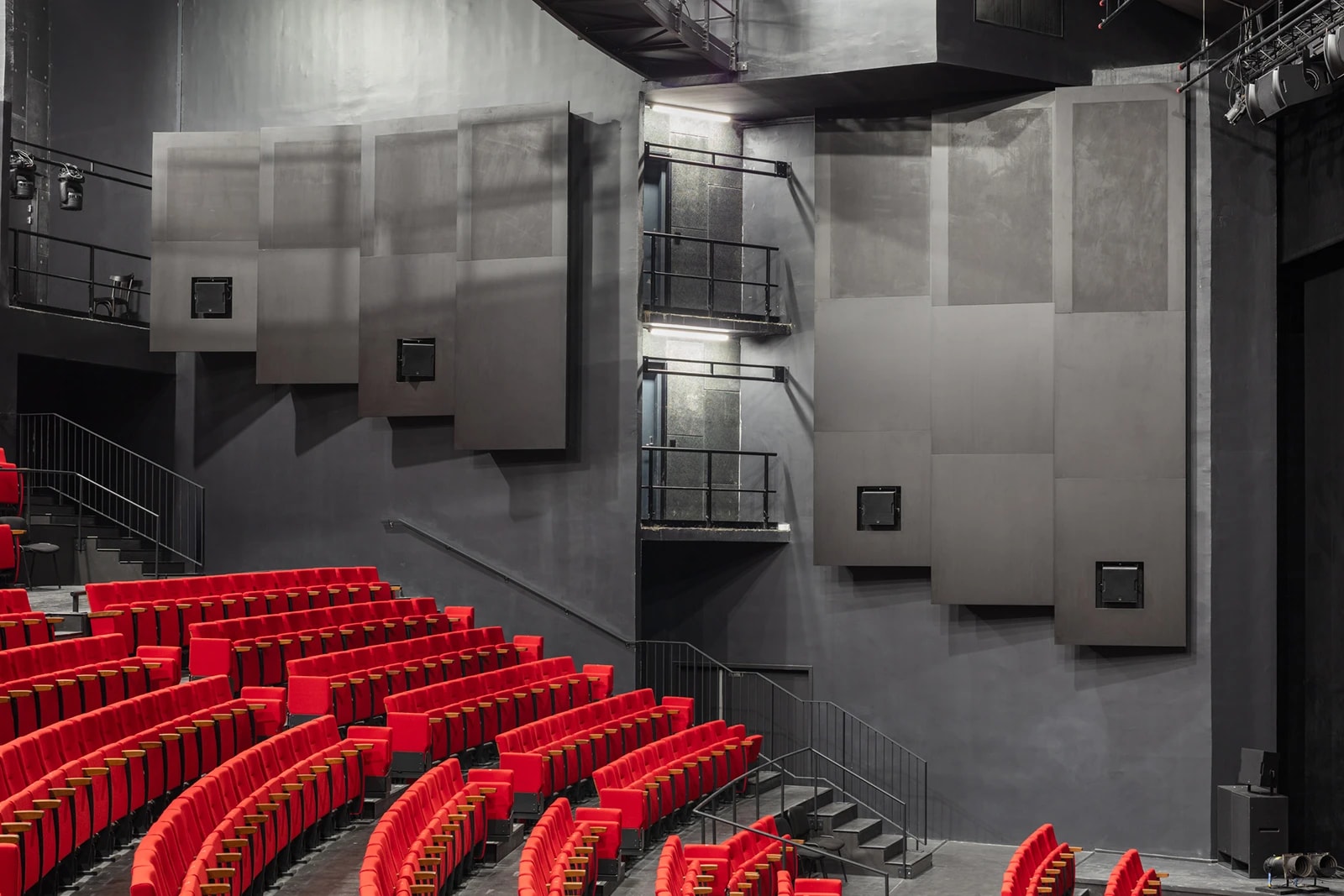
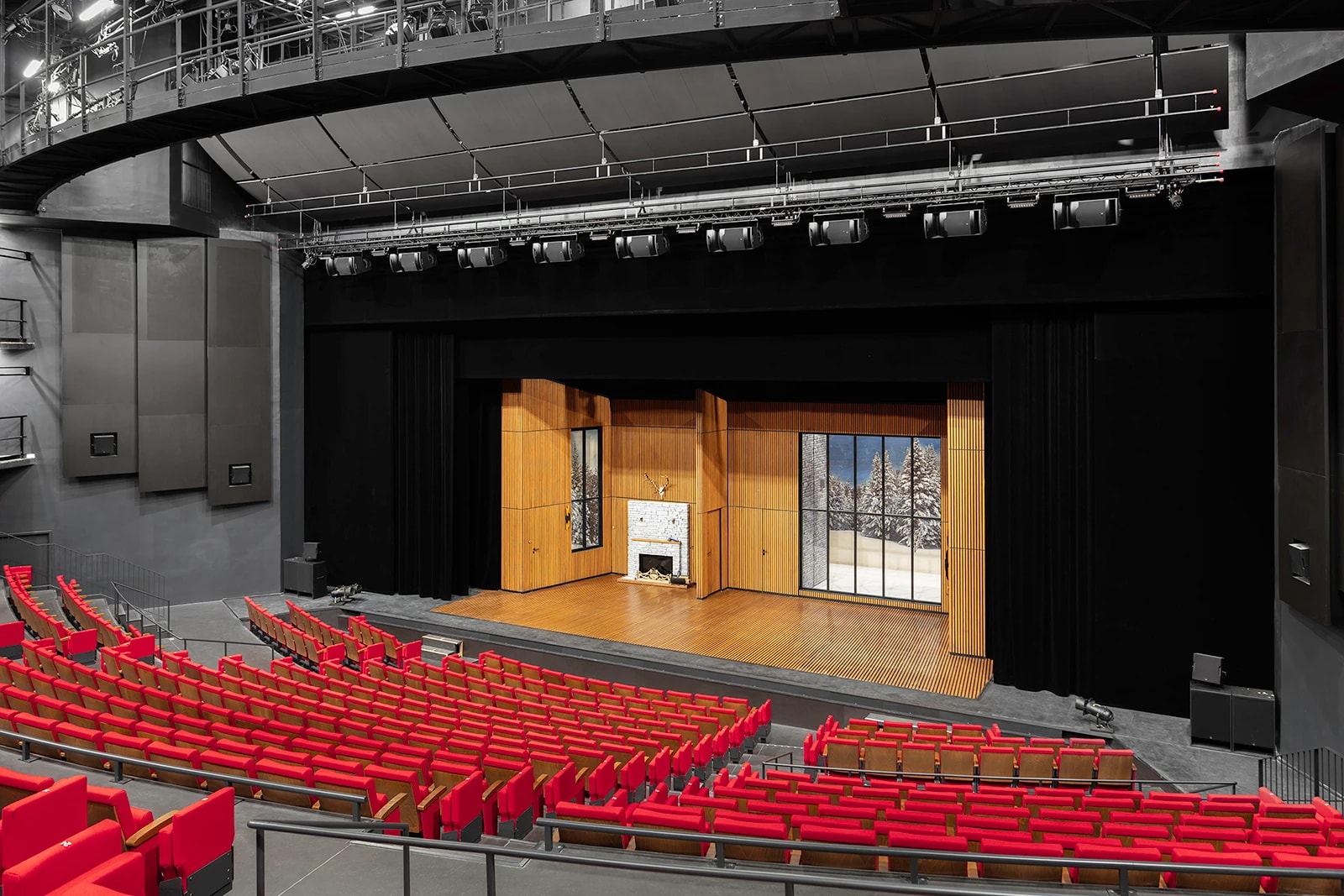
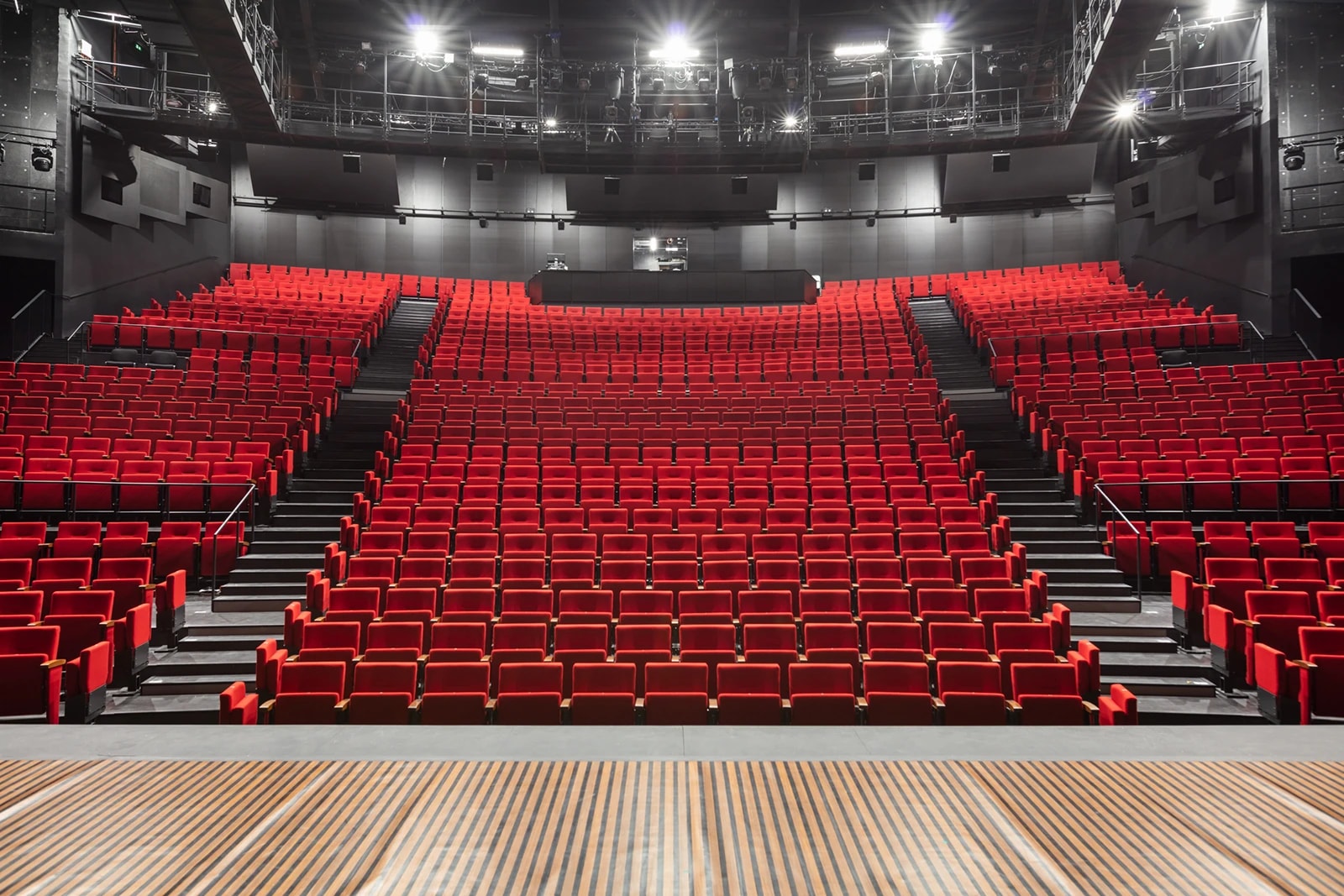
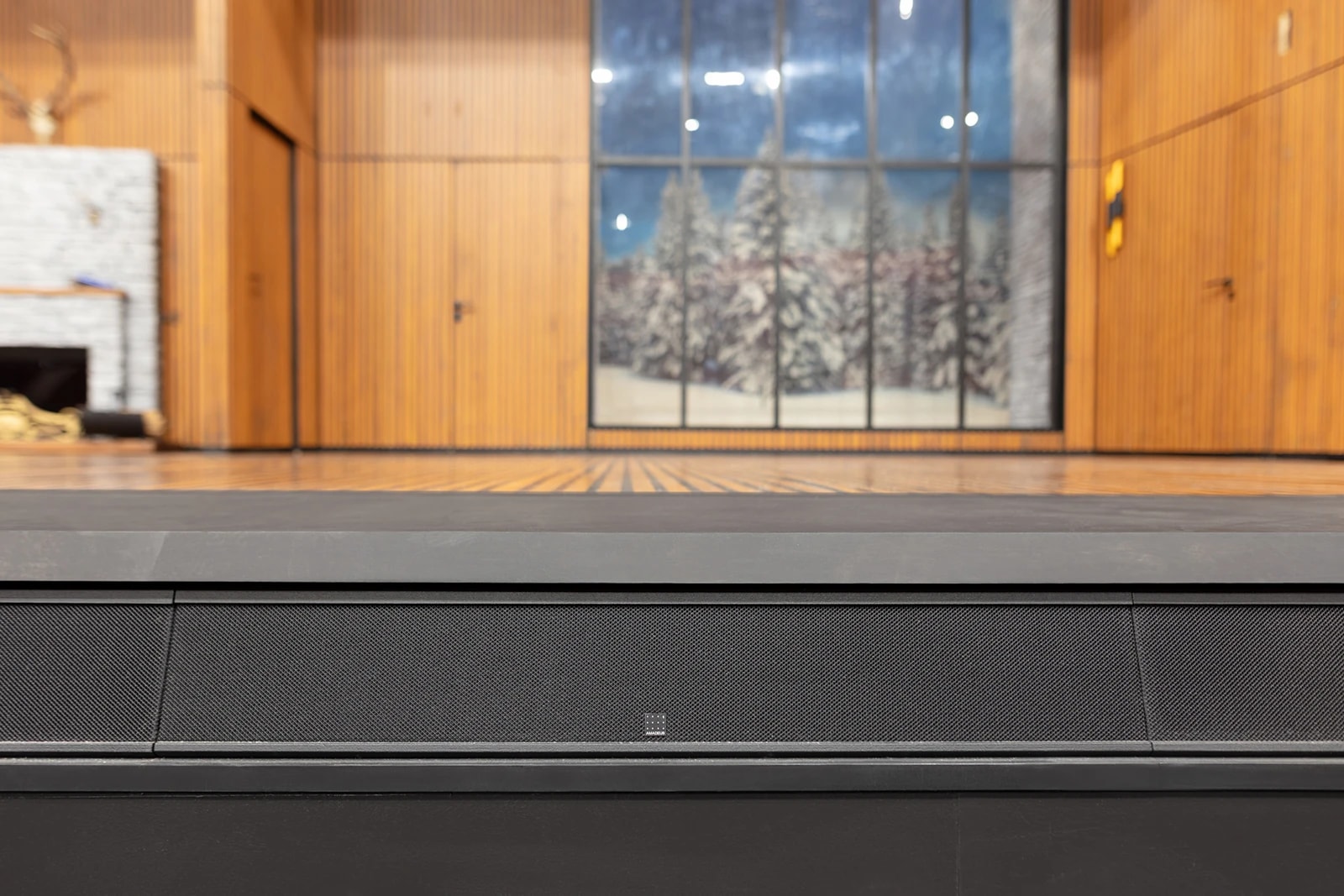
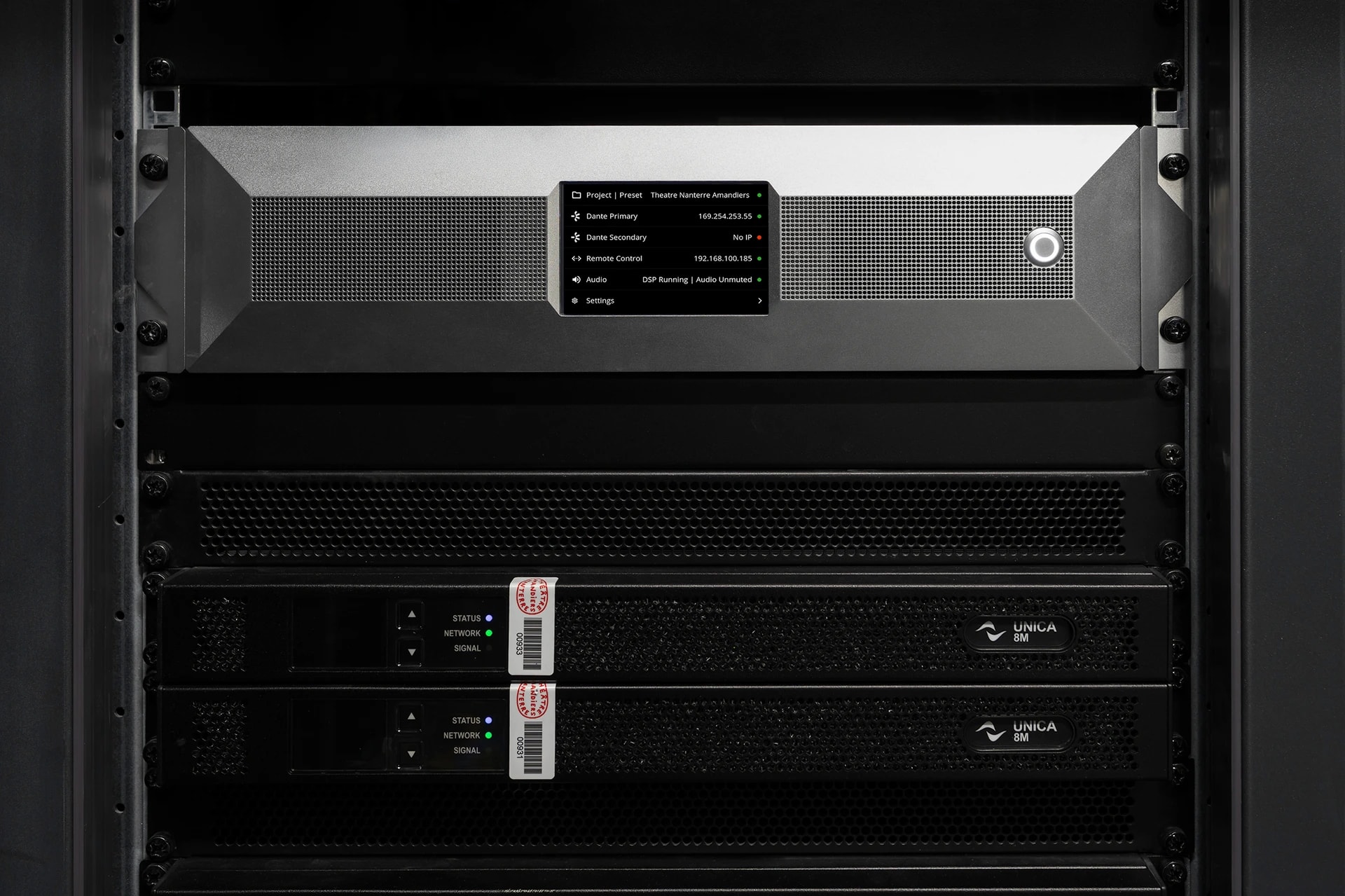
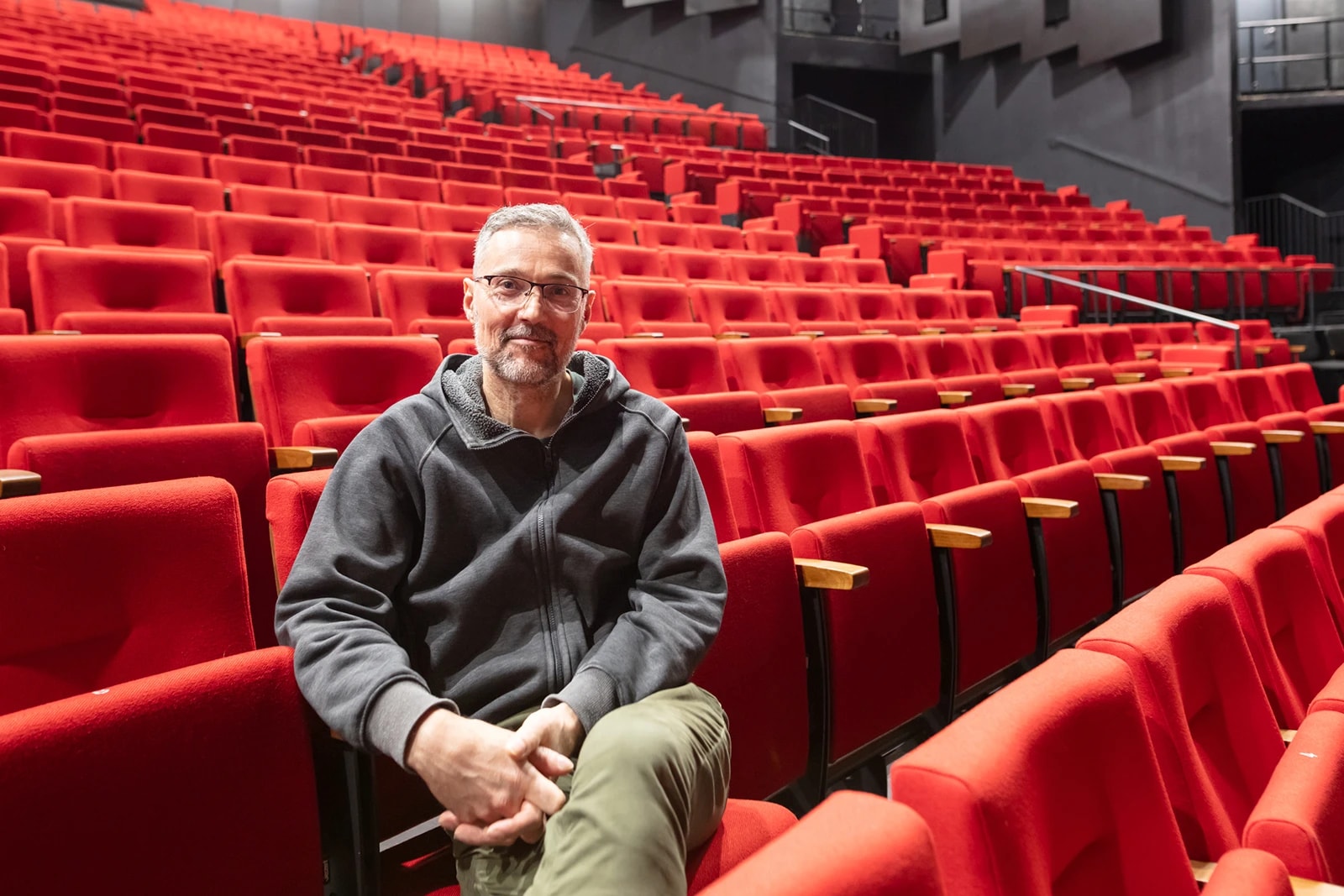
Photo credits — © Helen Karam