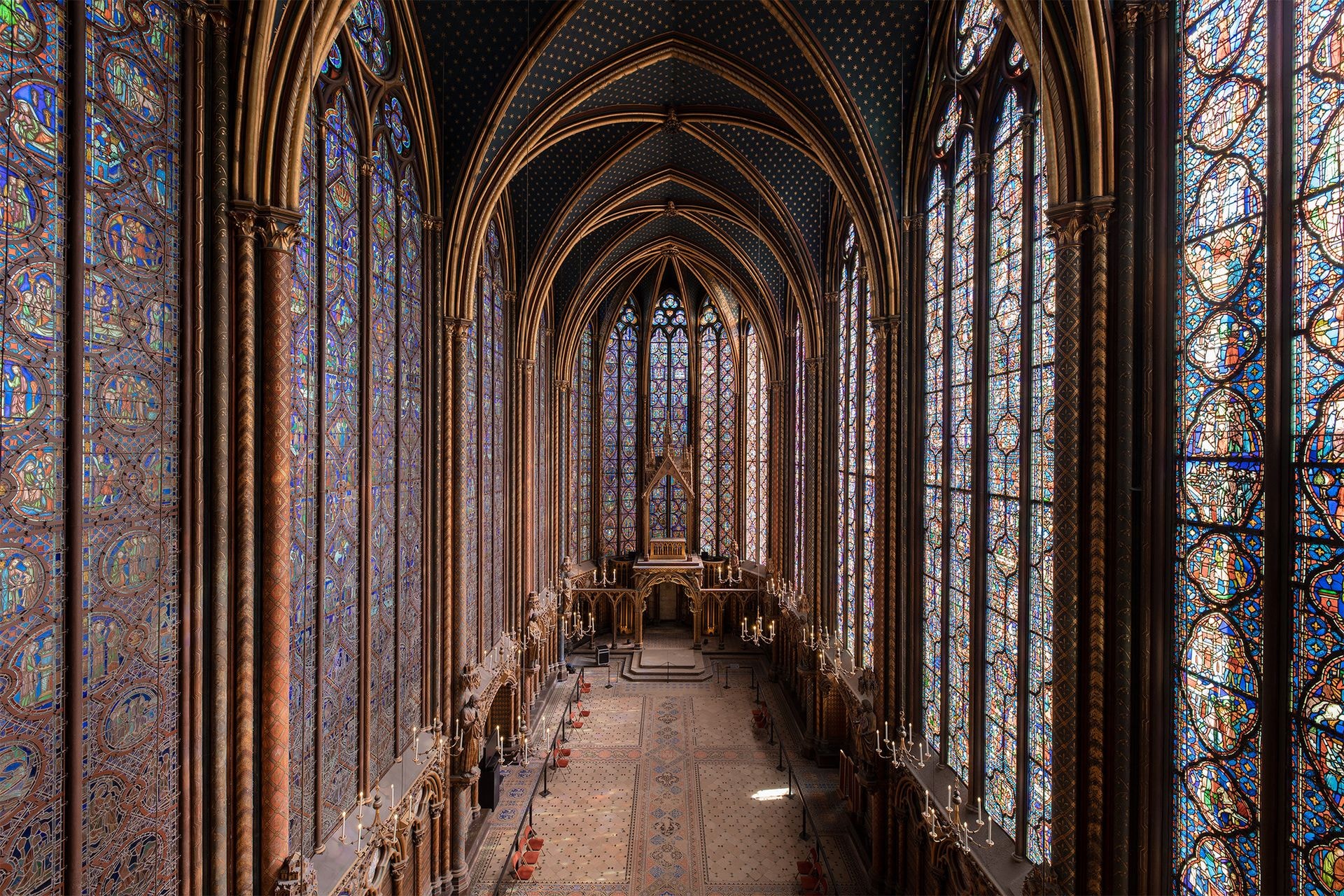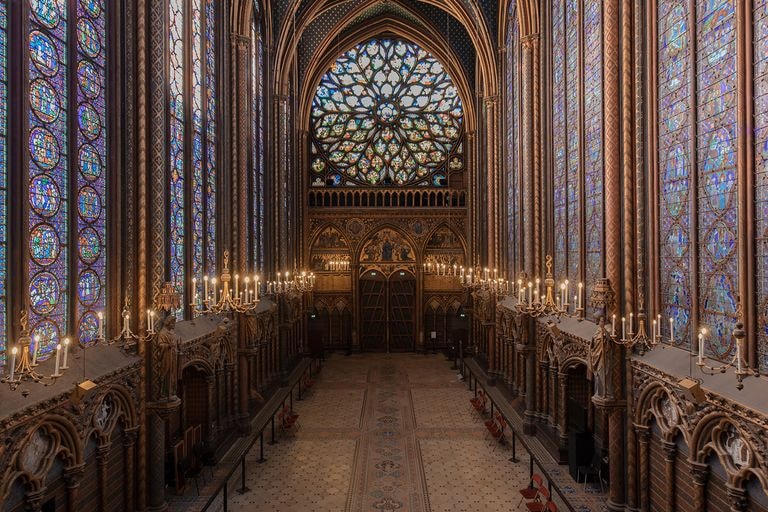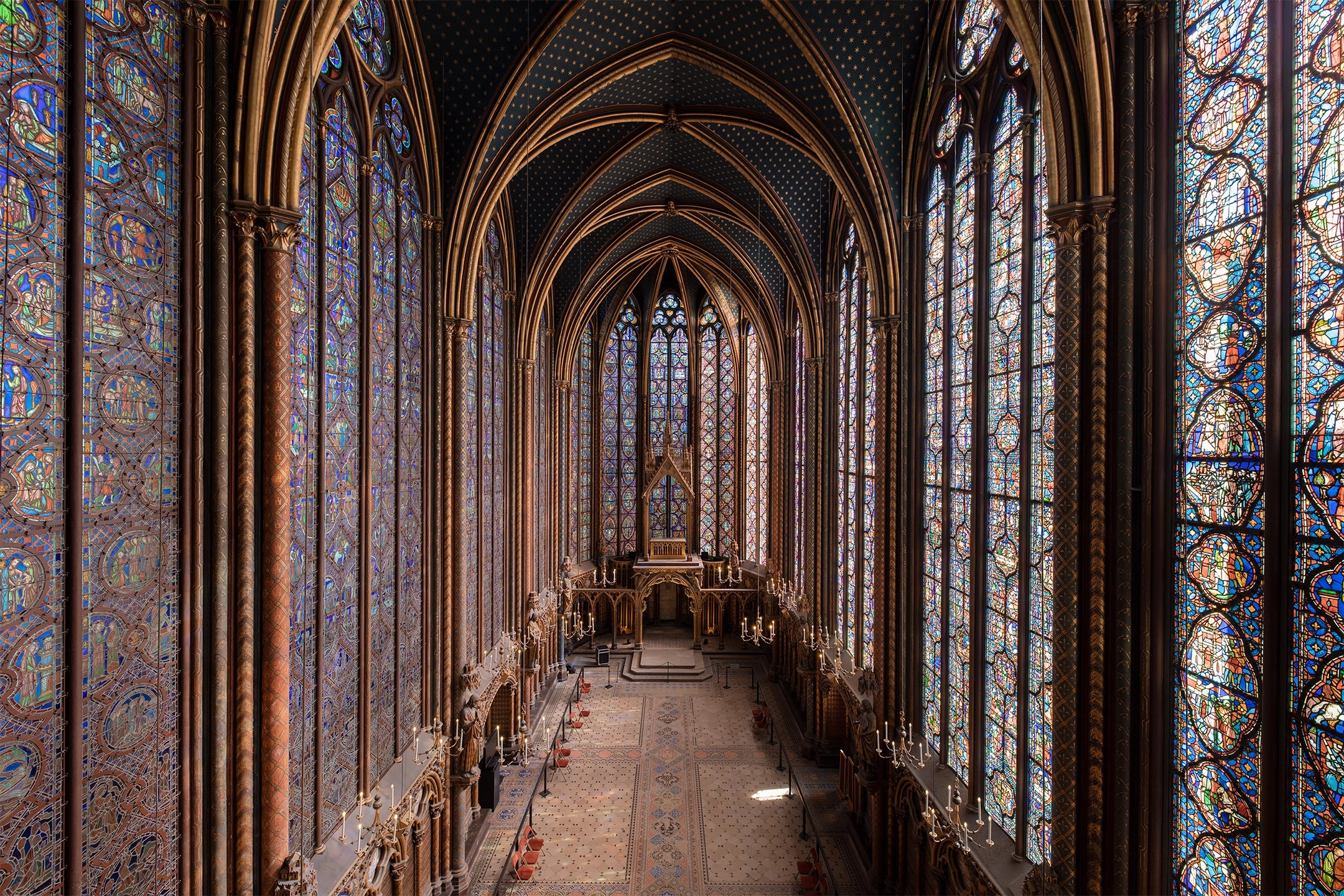
World-renowned theatre director Robert Wilson transformed the Sainte-Chapelle into an immersive sound and light installation entitled Gloria, presented every weekend from October to December 2022. Commissioned by the Centre des Monuments Nationaux to celebrate more than fifty years of Wilson's artistic presence in France, the work invited visitors to experience one of Paris's most iconic monuments through a dialogue between music, voice, architecture, and spatialized sound.
The project was initiated by Philippe Bélaval, then President of the Centre des Monuments Nationaux.
We have a determined policy of inviting contemporary artists because heritage and creation must work together. Bob was one of the artists I wanted to invite, to mark the 50 years of his presence in Paris. We felt that his perception of space, his mastery of sound and light could bring a lot to a monument.
said Philippe Bélaval.
It invites us to look at this monument, these windows, in a different way. It gives a new intensity to this visit experience which is already very strong.
agreed Cécile Rives, administrator of the Sainte-Chapelle.
For Wilson, the project carried a deeply personal significance. The American artist first discovered the Sainte-Chapelle during his first trip to Europe at the age of seventeen. The experience left a lasting impression on him. More than fifty years later, he returned to the Gothic landmark to create an installation celebrating both his long-standing relationship with France and the monument itself.
Created as a 25-minute immersive experience presented six times daily, Gloria combines a musical composition by long-time collaborator Richard "Dickie" Landry with excerpts from Lucretius' De rerum natura. Together, music, spoken word, and the extraordinary stained-glass windows of the upper chapel create a contemplative journey through light, space, and sound.
It's very different from staging for the Paris Opera, as an example. It took some time to figure out how to work in such a place, because of the reverberation time and the way you perceive sounds.
said the Robert Wilson.
Here, I didn't have to do anything! The light is already so extraordinary, especially the way it changes throughout the day.
added Wilson.
Composer Richard "Dickie" Landry, a long-time collaborator of Robert Wilson, drew on a mass he originally composed in 1985, adapting its Gloria section into a contemplative score whose layered textures echo the monument's spiritual atmosphere.
The soundtrack is enriched with excerpts from the great poem De rerum natura (About the Nature of Things) by Lucretius, a Latin philosopher of the first century BC. A secular echo to the great themes evoked by the stained glass windows, 'declining the relationship of man to nature, of the soul to the body, of the earth to the heavens.'
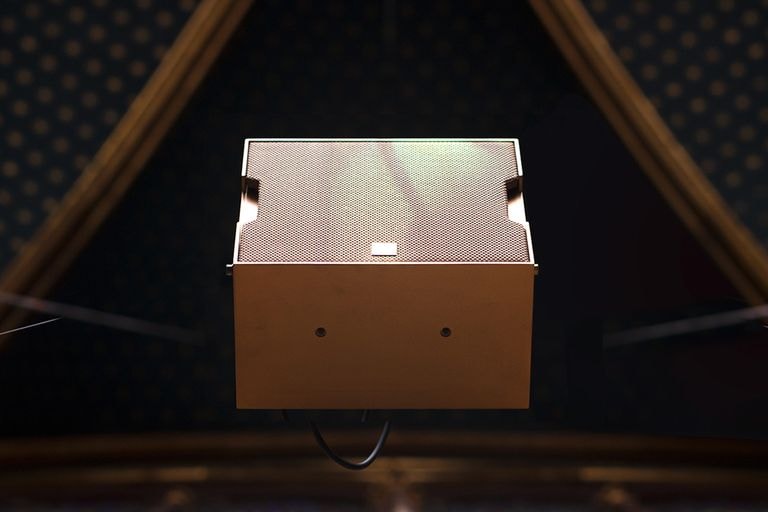
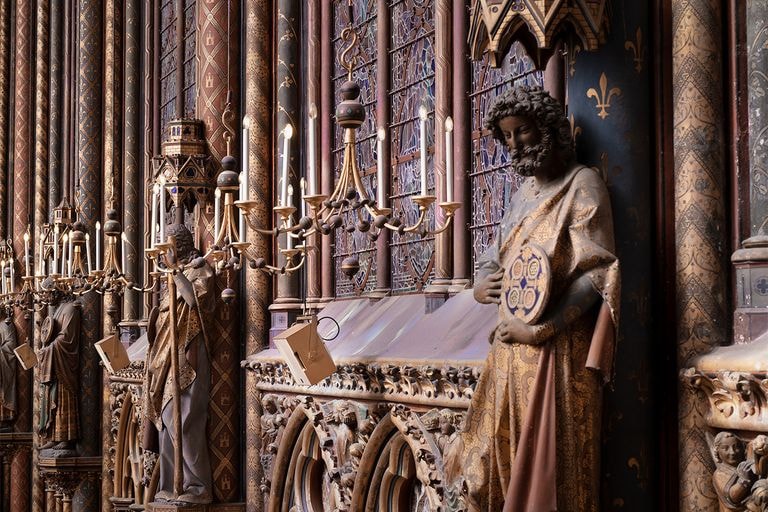
Bringing immersive sound into a 13th-century Gothic monument presented unique technical and architectural challenges. Any intervention had to respect the integrity of the Sainte-Chapelle while remaining virtually invisible to visitors.
To meet these requirements, Amadeus developed and installed a custom sound projection system in close collaboration with the Centre des Monuments Nationaux and its technology consultant Thierry Coduys.
Achieving this short-lived work led us to transpose to rental what has been our strength for a very long time: tailor-made design and supporting creators in their artistic approach at a technical level,
said Gaëtan Byk, CEO of Amadeus.
The electroacoustic system consists of fifteen loudspeakers positioned around and above the audience. Several loudspeakers were custom-designed specifically for the project and finished with gold leaf to blend seamlessly with the architectural language of the monument.
We worked closely with the curator of the Sainte-Chapelle and the teams of the Centre des Monuments Nationaux to develop integration solutions that guaranteed both the integrity of the monument and the utmost discretion of the electroacoustic system,
explained Pipo Gomes, Technical Director at Amadeus.
The installation was powered by HOLOPHONIX Native, the spatial audio software developed by Amadeus in collaboration with IRCAM. Using Wave Field Synthesis (WFS), parametric reverberation, and object-based spatialization tools, the system allowed sound designer Nick Sagar to position, move, and shape sound sources throughout the chapel in two and three dimensions.
Working directly from his Logic Pro workflow, Nick Sagar used the HOLOSCORE plug-in to automate trajectories and spatial movements while maintaining his existing creative process. HOLOPHONIX's reverberation engine was also used to enhance Landry's composition, creating the impression of a virtual organ within a monument that contains none. Additional loudspeakers operating in diffuse-field mode, combined with discreet low-frequency reinforcement near the altar, contributed to the richness, cohesion, and spatial depth of the installation.
We used the reverberation engine available in HOLOPHONIX Native to homogenize the diffusion of the system and the acoustic response of the Sainte-Chapelle. It also allowed us to give the synthesizer composition a more majestic dimension, creating the impression of a virtual organ within a monument that contains none,
explained Adrien Zanni, researcher and developer at Amadeus for the HOLOPHONIX project.
The sound overwhelms you. It comes from the right, the left, the centre, the ceiling,
commented Wilson.
The result was an immersive environment in which technology disappeared behind the experience itself, allowing visitors to rediscover the Sainte-Chapelle through sound, light, and contemplation.
These kinds of places are essential, especially in cities. We have very busy lives. Paris is a very animated city. Here's a place where you can come and take the time to think and take the time to dream,
Wilson concluded.